

River flooding in Calgary
Conditions for Wednesday, July 15: Normal flows returning


Flood dial image description
Flood dial image description: Normal spring river flows.
Current outlook
Current outlook
- No river flooding expected in the next five days.
- Today through Saturday, we’re expecting highs up to 29°C, with a chance of showers today and Friday.
- Flows will continue to stay steady or subside slowly through the week.
Summary of the 2026 high flow season:
- Snowpack conditions were above average, approximately 120 – 150 per cent of normal.
- Precipitation from mid-May to mid-July was above average, approximately 150 per cent of normal.
- We experienced two significant rain events:
- May 30–June 1: Approximately 100 mm of precipitation fell on eastern slopes, with up to 150 mm in the Jumpingpound Basin. Combined with elevated snow melt, this raised flows on the Elbow River to 86 m3/s and on the Bow River to 474 m3/s.
- June 27–29: Approximately 150 mm of precipitation fell on eastern slopes. With the intense rainfall, Elbow River flows recorded a peak flow of around 250 m3/s (at Bragg Creek, early morning on June 29) and 558 m3/s (Bow River at Calgary; late evening on June 29).
- The Springbank Reservoir operated for the first time ever, diverting 13 million cubic metres of floodwater. All water was released back to the Elbow River by July 10.
- Elbow River flows downstream of Glenmore Dam were maintained below 80 m3/s and the reservoir level was maintained below crest level.
How we’re responding
How we’re responding
- No impacts at this time.
- We’re continuing to monitor rainfall and river conditions.
- In preparation for flood season each year, The City completes exercises and testing of infrastructure like river outfalls, lift stations and temporary barrier deployments.
What you can do
What you can do
Stay safe near rivers
When the rivers and creeks rise in Calgary, stay away from the banks, including children and pets, as high flows can cause bank erosion and instability. Before going out on the river (rafting, fishing, kayaking), check calgary.ca/watersafety. When a boating advisory is in place, stay off the river for your safety.
Direct rainwater away from your home
Eavestroughs and extensions should drain at least 1.5 meters (5 feet) away from your and your neighbour's home and onto a landscaped area so the water can soak into the ground.
Ensure your basement is flood resilient
When river levels are high, and/or when it rains heavily, water can enter basements. Check your sump pump and backflow valve if you have them, to make sure they are in good working order. Consider moving valuable or sentimental items to higher levels. Consider installing a water alarm that will give you an early alert if there’s any water entering your basement. Check your insurance policy to see if you’re covered for groundwater basement flooding. Visit Basement flooding and seepage to learn more.
Help us keep an eye on storm drains
During intense rainfalls, storm drains can be temporarily overwhelmed and it may take some time for water to drain. In some areas of the city, we’ve installed a device in the storm drains to manage how fast water flows into the pipes from the storm drain that helps prevent the system from becoming overwhelmed with stormwater, avoiding water backups into basements or flooding into houses, garages and businesses.
If you see water pooling around storm drains and it hasn’t drained within 90 mins, take a photo and submit it via the 311 app or online request. This will help City crews respond on a priority basis. If safety is a concern or water is entering a building, contact 311 immediately.
Stay informed
Stay informed
Weather and river conditions in Calgary can change quickly and without notice.
- Sign up for alerts.
- For real-time updates and advisories, see Alberta’s current river flow.
- Watch the media and The City’s social media for updates if conditions warrant it.
A note about online AI-generated flood forecasts:
The City and Provincial River Forecast Centre are aware of various AI generated flooding reports, such as Google Flood Hub. Please note that forecasts from official local sources, such as The City and the AB River Forecast Centre, account for weather model uncertainty, reservoir operations, and advisory levels, and take into account knowledge of on-the-ground flood thresholds that include community flood protection measures. The City, River Forecast Centre and Environment and Climate Change Canada meteorologists are in close contact, and local emergency managers will issue the appropriate advisories as required.
Please note:
This is the final river conditions update in 2026.
The highest risk of river flooding occurs May 15 – July 15. With most of the snowpack gone and no significant rain in the forecast to create river flood risk, we have ended reporting for the 2026 high river flow season.
River condition updates will return in May 2027.
As river flows are always changing, make sure you are floating and boating safely. Check calgary.ca/watersafety before heading out onto the river.
Looking for updates? Sign up for the Calgary’s Rivers newsletter to get the latest news about Calgary’s watershed, including river conditions, tips and resources during high river flow season.
Did you know The City also monitors our water supply throughout the year? Visit calgary.ca/drought for the latest updates.
High river flow season is May 15 - July 15
Stay updated
Sign up for the Calgary's Rivers newsletter for the latest news about Calgary’s watershed, river conditions, tips and resources during high river flow season.
Subscribe hereFlood resources
We can’t prevent flooding entirely, and it can happen quickly with little or no warning. Protecting our community and citizens from flooding is a shared responsibility – we all have a role to play.
-
View flood maps
Know your flood risk. Search for your property on our flood mapping tool to see if you are at risk for flooding.
-
Prepare for flooding
Take steps to reduce flood damage to your home and ensure your family knows what to do if a flood happens. Find preparation resources on this page, including guides in Traditional and Simplified Chinese.
-
Stay informed
Sign up for e-mail alerts and find a list of flood notification resources, including City of Calgary emergency notices.
Did you know?
Flooding can occur even during dry conditions.
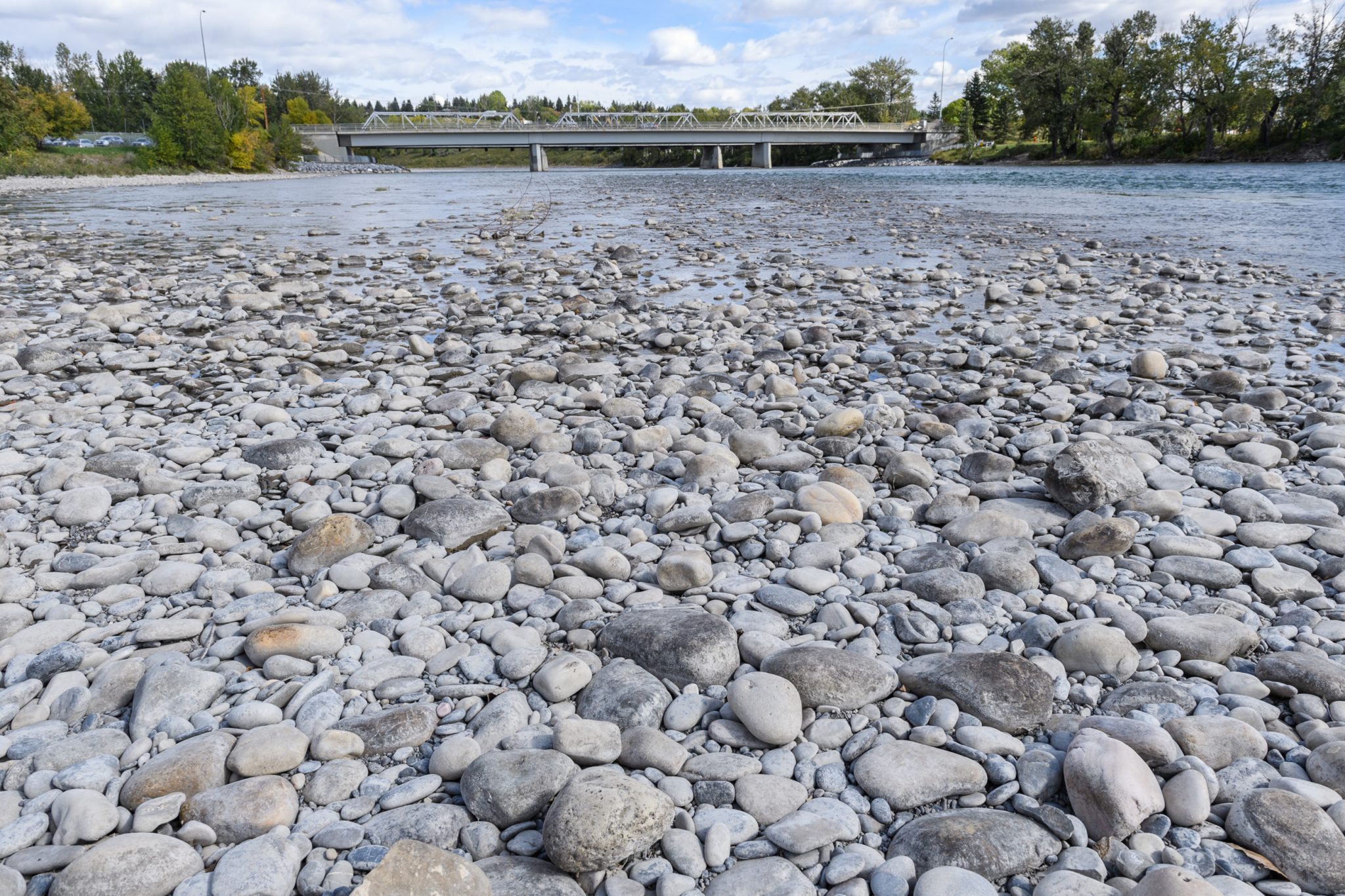
Although Calgary has a dry climate, flooding is always possible. With our proximity to the mountains, we can experience unpredictable swings in the weather, from heavy rains leading to floods, to many weeks of dry temperatures and little rain leading to droughts.
Learn more about how we monitor and respond to the conditions and how you can help:
Flood mitigation projects
Calgary is better prepared today for flood events like the one in 2013. We’ve taken steps to reduce Calgary’s exposure to flood damage that have reduced our flood risk by 70 per cent as of 2026.
Sunnyside Flood Barrier
The communities of Sunnyside, Kensington and Hillhurst are now protected from a 1-in-100 flood, due to the functional completion of the Memorial Parkway / Sunnyside Flood Barrier. The 2.4 km barrier includes a combination of permanent concrete and metal flood walls, with additional temporary barriers to close gaps across roadways and pathways during flood response.
Springbank Off-Stream Reservoir
Calgary’s Elbow River communities are now protected from 2013-sized floods, thanks to the new Springbank Off-Stream Reservoir (SR1) located along the Elbow River, upstream of Calgary. The ‘dry' reservoir will only be filled during floods, and will work together with the Glenmore Reservoir to significantly increase the overall floodwater storage capacity on the Elbow River.