

Proposed Limitations on Rowhousing
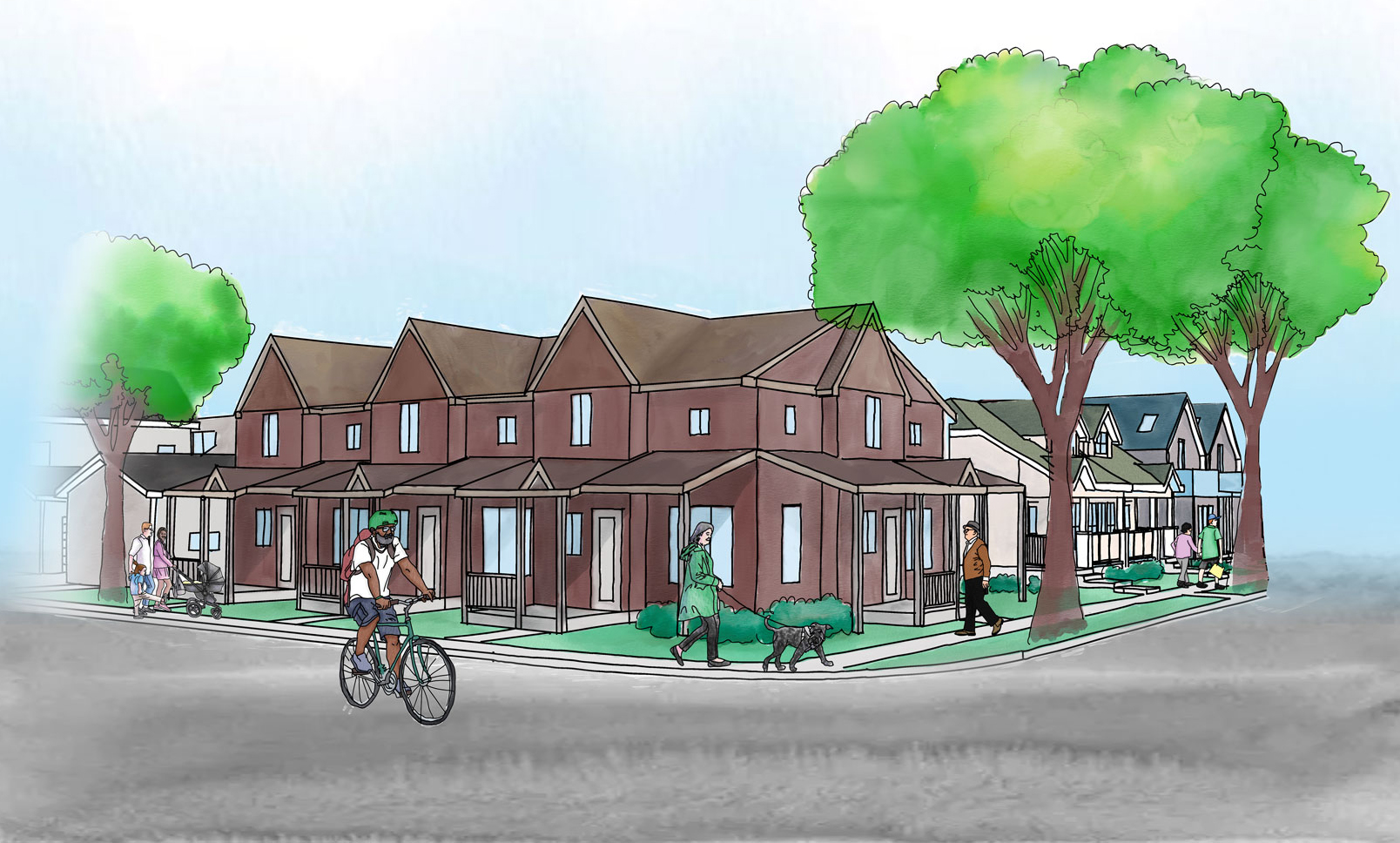
Local Area Planning Proposed Limitations on Rowhousing
Local area plan updates to add limitations on rowhousing (limited scale policies)
City Council directed Administration to propose location-based criteria limiting where rowhouses and townhouses can be developed for six of the approved local area plans (LAPs).
If approved by Council, these updates would apply the same location-based criteria found in the Westbrook Communities and Heritage Communities LAPs to the rest of the approved LAPs. The policies would add limitations on where housing forms containing three or more homes, such as rowhouses and townhouses, could be developed within residential neighbourhoods.
These changes have not yet been approved. Council will consider the proposed amendments at a Public Hearing on Nov. 9, 2026.
You can participate in the Public Hearing by:
- watching the Council meeting live stream
- submitting a written comment
- registering to speak at the Public Hearing
- When registering to speak, include "Local Area Plan Limited Scale Policies" in the Agenda Item section

What is changing
What is changing
What is changing
The proposed updates would add consistent Limited Scale Policies that would apply to areas identified as “Neighbourhood Local – Limited Scale” within the following local area plans:
- North Hill Communities
- East Calgary International Avenue Communities
- Riley Communities
- South Shaganappi Communities
- Chinook Communities
- West Elbow Communities
The Westbrook Communities and Heritage Communities Local Area Plans aren't part of the proposed amendments because they already have Limited Scale Policies.
The proposed updates would limit where rowhouses and townhouses are supported in Neighbourhood Local – Limited Scale areas to sites that have a rear lane and meet one of the following location criteria:
- within a transit station area,
- along or adjacent to an identified main street,
- on a corner parcel,
- or adjacent to a school, park, or open space.
Where the policies would apply
Where the policies would apply
Where the policies would apply
The proposed Limited Scale Policies would apply only to the areas already identified in the local area plan for grade-oriented housing forms of three storeys or less. These are areas where the Urban Form Category is Neighbourhood Local (found on Map 3: Urban Form), and the Building Scale is Limited (found on Map 4: Building Scale).
This map is for illustrative purposes only. Refer to the approved LAP for the official maps.
The hatched areas shown in the example map above illustrate where the Limited Scale Policies would be applied. Within these areas, rowhouses and townhouses would be restricted to parcels with a lane that are either within transit station areas, along identified main streets, on corner parcels, or adjacent to a school, park or open spaces.
To see a map of where the proposed policies would apply in your local area plan, click the links below:
- North Hill Communities – Neighbourhood Local, Limited Scale Areas
- East Calgary International Avenue Communities – Neighbourhood Local, Limited Scale Areas
- Riley Communities – Neighbourhood Local, Limited Scale Areas
- Chinook Communities – Neighbourhood Local, Limited Scale Areas
- South Shaganappi Communities – Neighbourhood Local, Limited Scale Areas
- West Elbow Communities – Neighbourhood Local, Limited Scale Areas
Properties located outside of the hatched areas shown on the maps are not affected by the proposed changes.
These maps are for illustrative purposes only. Please refer to the approved local area plan for official maps.
Why the updates are proposed
Why the updates are proposed
Why the updates are proposed
On May 26, 2026, Council directed Administration to amend six approved local area plans following Council’s decision to repeal citywide rezoning.
The proposed amendments would create greater consistency across approved local area plans by applying the same location-based Limited Scale Policies already used in the Westbrook Communities and Heritage Communities LAPs.
Location-based criteria
Location-based criteria
Location-based criteria
In the proposed updates, rowhouses and townhouses are supported on parcels that have a rear lane and are either within a transit station area, along or adjacent to an identified main street, on a corner parcel, or adjacent to a school, park or open space.
Criteria: Rear Lanes
Rationale: Rear lanes provide vehicle access and servicing (e.g. waste and recycling pickup) in a dedicated space, ensuring the sidewalk and streetscape remain intact.
Criteria: Transit Station Areas
Rationale: Transit station areas provide more mobility options for people who live nearby. Greater housing close to transit improves ridership, which helps support the transit network and services.
Criteria: Main Streets
Rationale: Main streets are strategic locations as high-activity areas that generally support higher densities than other areas in neighbourhoods. These support businesses along main streets, while allowing for sensitive transitions to adjacent homes.
Criteria: Corner Lots
Rationale: Corner lots with more than one side facing a street have additional space for access and servicing (e.g. waste and recycling pickup) and are better able to sensitively transition to adjacent homes, with one immediate neighbour on one side.
Criteria: Schools, Parks and Open Spaces
Rationale: Schools, parks and open spaces are strategic locations with local amenities within immediate walking distance of rowhouses and townhouses.
To see how the location-based criteria are applied, check out the diagrams in question 8 of the FAQ.
Overview of the proposed updates
Frequently asked questions
1. What is changing?
Council has directed Administration to make updates to the North Hill Communities, East Calgary International Avenue Communities, Riley, Chinook Communities, South Shaganappi Communities and West Elbow Communities Local Area Plans to add consistent “Limited Scale Policies” to these plans. The proposed updates would guide where three-or-more unit housing - such as rowhouses and townhouses - would be supported within residential neighbourhoods.
The proposed updates would provide consistency across approved local area plans by applying the same location-based criteria already used in the Westbrook Communities and Heritage Communities LAPs. If approved by Council, these changes would mean that instead of rowhouses and townhouses being supported everywhere, they would be limited in some areas to parcels with rear lanes (alleys) that are also either within transit station areas, along or adjacent to identified main streets, on corner parcels, or adjacent to a school, park, or open spaces.
2. Which Local Area Plans are being amended?
These amendments are proposed to six of the eight approved LAPs: North Hill Communities, East Calgary International Avenue Communities, Riley Communities, Chinook Communities, South Shaganappi Communities and West Elbow Communities.
Westbrook Communities LAP and Heritage Communities LAP are not included, as they already have the proposed policies.
3. What are the proposed Limited Scale Policies?
These updates would add Limited Scale Policies to six of the approved LAPs to align with the policies that already exist in the Westbrook Communities LAP and the Heritage Communities LAP.

The proposed changes are to add the following policies:
Policy
a. Secondary suites are supported where already allowed by the existing land use designation and are not considered a unit in the following policies.
b. Building forms that contain one or two residential units are supported in Neighbourhood Local, Limited Scale.
c. Building forms that contain three or more residential units should be supported on parcels with rear lanes in the following areas:
i. within transit station area Core Zones and Transition Zones;
ii. along a street identified as a Main Street or separated by a lane from a parcel along a Main Street;
iii. on corner parcels; or,
iv. adjacent to or separated by a road or lane from a school, park or open space greater than 0.5 hectares in size with no dimension less than 25 metres.
d. Building forms that contain three or more residential units in Neighbourhood Local, Limited Scale should be designed to complement the surrounding context and consider the impacts of massing, lot coverage and setbacks on the following:c
i. access to sunlight and shade on adjacent parcels; and,
ii. protection of existing, healthy trees or landscaping on the parcel, where appropriate.
4. Why are these changes proposed?
These proposed changes were directed by Council at the May 26, 2026, Regular Meeting of Council, in response to the repeal of citywide (blanket) rezoning. With the approval of the repeal, Council directed that six of the eight approved LAPs be updated to align the Limited Scale Policies across local area plans. For further details on the direction from Council, click here to view the minutes.
5. When do these changes come into effect?
Council has not yet made a decision on these proposed amendments. A final decision will be made when Council considers and votes on the proposed changes at the Public Hearing on November 9, 2026. Your input on these proposed amendments can be shared through the Public Hearing process.
6. Why is there no public engagement for this change?
Council direction was to conduct an awareness campaign only, as engagement was already conducted through the local area planning process and extensive feedback was collected through the citywide rezoning and repeal public hearings, as well as the Guide for Small Scale Housing. Although we are not collecting additional feedback during the awareness period, community members are invited to participate in the Public Hearing at Council on November 9, 2026.
7. Where do the proposed Limited Scale Policies apply?
The Limited Scale Policies apply in the areas identified for small scale housing in your local area plan. These areas are where the Urban Form Category (See Map 3, Urban Form) is identified as Neighbourhood – Local, and the Building Scale (See Map 4, Building Scale) is identified as Limited. To see a map of where the proposed policies would apply in your local area plan, click links below:
- North Hill Communities – Neighbourhood Local, Limited Scale Areas
- East Calgary International Avenue Communities – Neighbourhood Local, Limited Scale Areas
- Riley Communities – Neighbourhood Local, Limited Scale Areas
- Chinook Communities – Neighbourhood Local, Limited Scale Areas
- South Shaganappi Communities – Neighbourhood Local, Limited Scale Areas
- West Elbow Communities – Neighbourhood Local, Limited Scale Areas
These maps are for illustrative purposes only. Please refer to the approved local area plan for official maps.
In the hatched areas shown in the above maps, Rowhouses and Townhouses would be restricted to parcels with a lane that are also either within transit station areas, along identified main streets, on corner parcels, or adjacent to a school, park, or open spaces.
There are no changes proposed to areas outside of the Neighbourhood Local – Limited areas (areas outside of the hatched areas in the maps). In these locations, three-or-more unit homes could be supported if the land use district allows.
8. What is the location-based criteria?
Criteria: Rear Lanes
Rationale: Rear lanes provide vehicle access and servicing (e.g. waste and recycling pickup) in a dedicated space, ensuring the sidewalk and streetscape remain intact.
Criteria: Transit Station Areas
Rationale: Transit station areas provide more mobility options for people who live nearby. Greater housing close to transit improves ridership, which helps support the transit network and services.
Criteria: Main Streets
Rationale: Main streets are strategic locations as high-activity areas that generally support higher densities than other areas in neighbourhoods. These support businesses along main streets, while also allowing for space to transition to other housing forms.
Criteria: Corner Lots
Rationale: Corner lots with more than one side facing a street have additional space for access and servicing (e.g. waste and recycling pickup) and have space to better transition to different housing types.
Criteria: Schools, Parks and Open Spaces
Rationale: Schools, parks and open spaces are strategic locations with local amenities within immediate walking distance of rowhouses and townhouses.
These diagrams are for illustrative purposes only. Each application will be reviewed for location-based criteria.
9. If the updates are approved, where will 3+ unit housing - like rowhouses and townhouses - be allowed?
If Council approves the proposed amendments, within Neighbourhood Local – Limited areas, rowhouses and townhouses would only be supported in specific areas, such as parcels with rear lanes (alleys) that are also either within transit station areas, along or adjacent to identified main streets, on corner parcels, or besides open spaces like parks or schools. To see where Neighbourhood Local – Limited areas are within your community, view the maps.
In all other areas, three-or-more unit homes could be supported if the land use district allows.
10. Does this policy change where Single-detached and Semi-detached homes are allowed?
No. Single-detached and Semi-detached homes will continue to be allowed in all residential areas.
11. Why are these policies needed if Blanket Rezoning was repealed?
While Blanket Rezoning was repealed, landowners still have the right to apply to change the zoning of their property at any time. When an application to change the zoning is made (called a land use amendment application), Administration reviews the application against all applicable policies, including local area plans, and makes a recommendation to Council based on the policy guidance. Currently, the majority of the local area plans support three-or-more unit housing in all residential areas, so if an individual land use amendment was proposed in the middle of a single-detached area, the existing policy would support it. These proposed updates to the LAPs would change that; if a land use amendment was proposed in the middle of a single-detached area identified as Neighbourhood Local – Limited and it didn’t meet the criteria in the Limited Scale Policies, Administration would recommend refusal on the grounds that the application does not align with the policy. The application would go before Council for a Public Hearing, and Council would make the final decision.
12. Does this policy mean there will no longer be mid-block rowhouses and townhouses?
No. This policy will not completely eliminate mid-block Rowhouses and Townhouses, it will reduce the number of locations where they are allowed. Any existing mid-block development will be allowed to remain, and any developments that received approval before the amendments come into effect will be able to proceed with development as planned.
If the updates are approved, within Neighbourhood Local – Limited areas, there will be select locations where mid-block Rowhouses and Townhouses could potentially be approved on laned parcels: within transit station areas, adjacent to parks and along main streets.
13. Are the proposed policies new?
No. These policies already exist in the Westbrook Communities LAP and the Heritage Communities LAP and have been in effect since these plans were approved in 2023.
14. If my property doesn’t have a lane, but it meets one of the other criteria in the proposed policy, can I have a Rowhouse?
In order to comply with the proposed policy, the parcel must have a lane AND meet one of the other criteria (corner parcel, along a main street, adjacent to a park, school or open space, or be within a transit station area). In the example above, Administration would recommend refusal of a proposed land use amendment, as the parcel does not align with the policy. However, the application would go before Council for a Public Hearing, and Council would make the final decision.
15. What happens if I already have development approved that doesn’t align with the new policy?
Your original approval stands, Future development or changes to your property would need to comply with the appropriate policy and land use district rules at the time of application.
16. Why are the Westbrook Communities and Heritage Communities local area plans not being amended?
The Westbrook Communities and Heritage Communities local area plans are not being amended because they already have Limited Scale Policies. This is because these plans were approved before citywide rezoning.
17. Does this policy apply if I’m proposing a development that’s a Permitted Use?
If what you are proposing is a Permitted Use within your land use district, and meets all of the Permitted Use rules, then it will be approved.
18. The North Hill Communities LAP already has Limited Scale policies. Why is it being amended when Westbrook Communities and Heritage Communities LAPs are not?
The North Hill Communities LAP already has Limited Scale Policies, but they are different than the version in Westbrook Communities LAP and Heritage Communities LAP. The existing policies in the North Hill Communities LAP allow three-or-more unit housing in more locations than the proposed updates would allow.
Currently, Rowhouses and Townhouses in the North Hill Communities LAP are supported on parcels within transit station areas, along identified main streets, on higher activity streets, or where the parcel has a lane and parking can be accommodated. Only one of the criteria needs to be met, which means that the current policy can support rowhouses and townhomes in many mid-block locations and on some parcels that don’t have a lane. The proposed updates to North Hill would restrict these building forms to fewer locations.
19. I live in Rosedale in the North Hill Communities LAP, is there still a single detached special policy?
The proposed updates would not remove the existing Single Detached Special Study Area in the North Hill LAP.
20. Does this change mean that the same policy will be applied to all future LAPs?
The decision whether or not to propose these policies in future LAPs will depend on the Council decision on November 9. The LAPs currently underway (Carburn Communities, South Bow Communities and South McKnight Communities) will adjust their engagement tactics depending on how Council votes on this item.
21. Does this policy apply to communities without an LAP?
No, this policy is only being applied to six of the eight approved LAPs, and potentially future LAPs if Council chooses to implement it.
22. I still have questions, how do I learn more?
We are hosting a variety of information sessions both in-person and online.
How to learn more
We are hosting a variety of information sessions both in-person and online.
In-person sessions
- Oct. 1, 2026 – One-hour timeslots are available between 2-7 p.m.
- Oct. 7, 2026 – One-hour timeslots are available between 2-7 p.m.
- Oct. 14, 2026 – One-hour timeslots are available between 2-7 p.m.
Virtual

More LAP Resources
Find more LAP information and resourcese.